
AI Vaccines & the Broader Shift in Vaccine Development
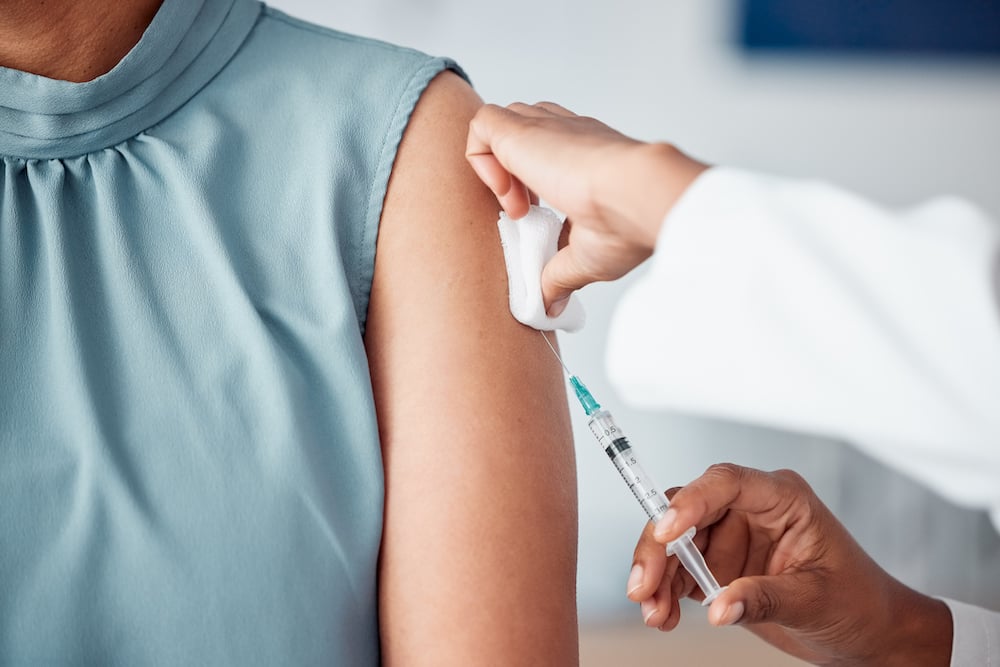
In June 2026, a vaccine designed almost entirely by computer simulation passed its first human safety trial. Researchers at the University of Cambridge and spinout DIOSynVax reported that their AI-engineered "super-antigen" — built to protect against the entire Sarbecovirus family, not just one strain of coronavirus — was safe and well tolerated in 39 healthy volunteers, and triggered immune responses to SARS-CoV-2, SARS, and related coronaviruses that haven't yet reached humans.
This so-called AI vaccine is a real example of how far AI-assisted vaccine discovery and design have come amid the broader fight against infectious diseases, and a natural lead into how AI is changing the conversation around vaccine development.
What Is Artificial Intelligence in Vaccine Research?
Artificial intelligence in vaccine research refers to the use of machine learning models to analyze genomic, protein, and immune-response data in order to design, predict, and evaluate vaccine targets computationally, before a single dose is tested in a lab animal or a human volunteer.
For most of modern vaccine science, development has followed a trial-and-error path: scientists identify a pathogen, test dozens or hundreds of antigen candidates in animal models, and refine a formulation over years of sequential testing. That process has historically taken 10 to 15 years from initial research to regulatory approval, most of it spent narrowing down which candidate is even worth testing in humans.
AI changes where that time gets spent. Instead of testing potential vaccine candidates one at a time, machine learning tools can screen thousands of genomic sequences, protein structures, and immune-interaction datasets simultaneously, surfacing the handful of candidates most likely to work before lab testing begins.
Applications of AI in Vaccine Development
AI's role here spans several distinct AI-based approaches, each addressing a different part of the design problem to accelerate innovation.
Antigen Discovery and Epitope Prediction
Epitope prediction uses machine learning models to identify the specific regions of a pathogen's proteins that trigger a B-cell or T-cell immune response. AI models can scan an entire protein sequence and rank candidate epitopes in a matter of days. Multi-epitope vaccine candidates for malaria, tuberculosis, and HIV — diseases where a single-antigen approach has historically struggled — have been designed using exactly this method. For clinical trial sites, this means candidates increasingly arrive with a more complex immunological profile and more precise inclusion criteria than earlier vaccine generations.
Immunogenicity Modeling and Vaccine Efficacy Prediction
Immunogenicity modeling is the use of AI to predict how a candidate vaccine will interact with the human immune system before it's tested in a person. Deep learning classifiers trained on prior trial data can distinguish between immune responses likely to be protective and those that aren't. It's a process closely related to immune bridging, where a new candidate's response is compared against a known, previously validated benchmark rather than waiting for full efficacy data. What this means for clinical trials: sites will increasingly be asked to collect the specific immune markers these models were trained to predict.
Adjuvant Identification and Immunomodulation
Adjuvant identification uses AI-driven screening to evaluate candidate adjuvants, the substances added to a vaccine to strengthen its immune response, for safety, stability, and immunogenicity before they reach preclinical testing. This has opened the door to precision adjuvant design: formulations tailored to a specific antigen or a specific target population, rather than a one-size-fits-all approach. In the context of clinical research, sponsors are more likely to test multiple adjuvant-antigen combinations within the same program, which increases the operational complexity a site needs to manage across arms.
Beyond Vaccine Discovery: AI and Accelerating Clinical Trials
This is where AI tools shift from vaccine design into day-to-day trial operations.
Adaptive Clinical Trial Design Powered by AI
Adaptive trial design uses AI to adjust trial parameters, such as dosing, participant stratification, or stopping rules, in real time, based on data as it's collected, rather than fixing every parameter in advance. This can reduce the total number of participants a trial needs and shorten its overall duration, but it also means research sites need to be able to implement protocol changes mid-trial without losing momentum.
Predictive Analytics for Patient Recruitment and Enrollment
Predictive enrollment modeling uses AI to forecast which patient populations are likely to meet a trial's inclusion and exclusion criteria, improving enrollment speed and reducing screen-failure rates. These tools are only as useful as the patient pool a site can actually draw from. Remington-Davis maintains a database of more than 19,000 patients with local healthcare partnerships that further expand that pool.
Real-Time Safety Monitoring and Immune Response Prediction
Real-time safety monitoring applies AI models to incoming adverse-event and immune-response data during a trial, flagging safety signals and predicting immune-bridging outcomes as they emerge. This narrows the lag between what a site observes and what a sponsor needs to decide. It also means sites need clean, fast, well-structured data pipelines to feed those models accurately.
How AI Affects Pandemic Preparedness
Variant-Proof and Universal Vaccine Design
The Cambridge pan-Sarbecovirus candidate is a prototype for a broader ambition shared across next-gen vaccine research and development: vaccines engineered around genetically conserved features so they remain effective even as a virus mutates, rather than needing annual reformulation.
In the U.S., the Advanced Research Projects Agency for Health (ARPA-H) is pursuing a similar goal through its APECx program, short for Antigens Predicted for Broad Viral Efficacy through Computational Experimentation. The program aims to build a computational toolkit for designing antigens that protect against entire virus families rather than a single strain.
Combined with genomic surveillance, this points toward a more proactive model of pandemic response.
AI-Powered Genomic Surveillance and Emerging Threat Detection
AI models can scan global sequence databases, such as GISAID, in real time to track mutation patterns and flag early signs that a virus is evolving in a way that could evade existing vaccines. This gives researchers a head start on redesigning boosters before a variant becomes dominant.
The World Health Organization runs a comparable system: its Hub for Pandemic and Epidemic Intelligence, based in Berlin, uses an AI-powered platform called Epidemic Intelligence from Open Sources to flag public health threats worldwide as they emerge.
The FDA's Move Toward Replacing Animal Testing With AI Models
In April 2025, the FDA announced a roadmap to reduce or replace animal testing requirements for certain drug and biologic development, including monoclonal antibodies, in favor of AI-based computational models and other "New Approach Methodologies," such as organoid and advanced in vitro systems. If this approach extends further into vaccine preclinical work, it could compress the timeline between candidate design and first-in-human testing.
Where a Human-Led, Technologically Aware Clinical Site Partner Fits In
None of the shifts described above change what happens once a candidate reaches a clinical trial site: it still has to be dosed, monitored, and evaluated by people. What's changing is the pace and complexity candidates arrive with. That's the case for finding a site that understands where the science is heading and pairs that awareness with a human-led approach to execution: the discretion, oversight, and patient relationships that no model replaces.
Frequently Asked Questions
How is artificial intelligence (AI) used in vaccine development?
AI supports vaccine development across the full pipeline:
- Antigen discovery — screening genomic and protein data to identify candidates
- Epitope prediction — pinpointing which regions trigger an immune response
- Immunogenicity modeling — predicting how the immune system will react before human testing
- Adjuvant optimization — refining substances that strengthen vaccine response
- Clinical trial design — enabling adaptive dosing and enrollment strategies
- Supply chain planning — forecasting distribution and cold-chain needs
What is an AI-designed or AI vaccine?
An AI-designed vaccine is one whose core component — typically an antigen or multi-epitope construct — was computationally designed by AI analyzing genomic data from related pathogens, rather than derived from a live or inactivated pathogen. The first to pass a human trial was a pan-Sarbecovirus candidate developed by the University of Cambridge and spinout DIOSynVax.
Can AI shorten vaccine development timelines?
Yes, AI has helped compress specific phases from years to months, particularly antigen discovery and epitope mapping. COVID-19 was the first major demonstration of this at scale. That said, AI shortens design and discovery; it doesn't replace the need for full human clinical trials.
What are the main challenges of using artificial intelligence in vaccine research?
The main challenges include:
- Data heterogeneity across immunological datasets
- The "black box" problem of model interpretability
- Regulatory uncertainty around AI-generated candidates
- Algorithmic bias from underrepresented populations in training data
What does AI in vaccine research mean for clinical trial sites?
AI-accelerated development means candidates move faster from preclinical work into Phase I. That puts pressure on sites to keep pace through fast contract execution, large and diverse pre-screened patient pools, and staff experienced in managing complex, fast-moving protocols.